

The Essential Japan Travel Guide: Trains, First-Time Tips & When to Go
Updated: Nov 7, 2025
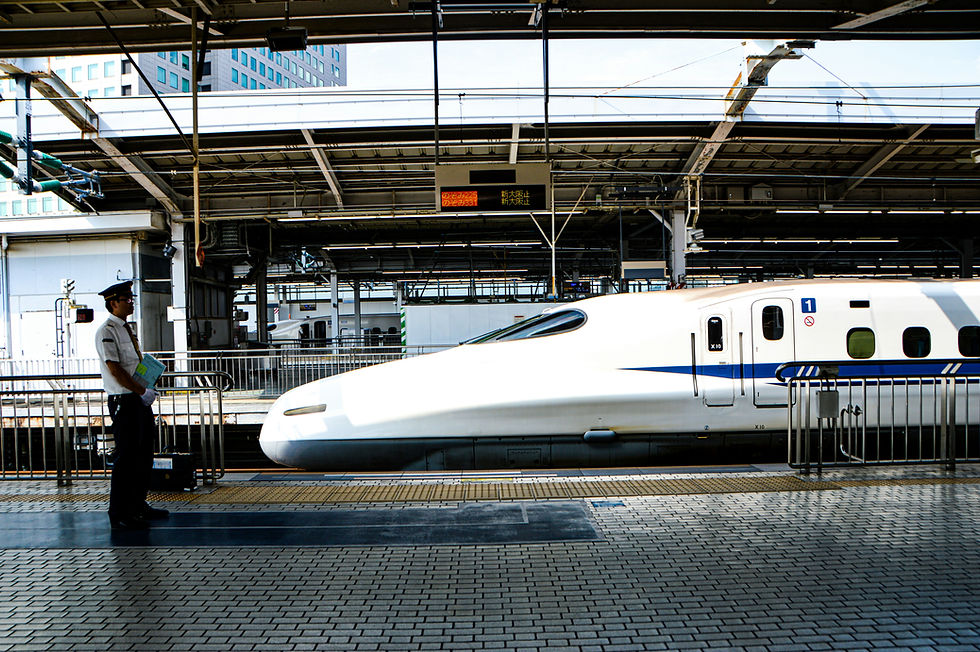
Visiting Japan for the first time? Or just coming back and want to travel smarter? Whether you’re exploring neon Tokyo, historic Kyoto, rural Hokkaido, or the warm islands of Okinawa, this guide covers the travel basics you always need: how to get around (especially by train), what to know before you go (visas, apps, etiquette, money), and when is the best time to visit for weather, festivals, and natural beauty. Bookmark this, share it — the more prepared you are, the better your trip will be.
1. How to Use Japan’s Train System: JR Pass, Metro, and Shinkansen Explained
Japan’s train network is world class: fast, frequent, clean, safe. But with multiple operators, different passes, and a few rules, it can be confusing at first. Here’s what to know.
JR Pass & Regional Passes
What it is: The Japan Rail Pass (JR Pass) is a ticket-only-for-visitors that gives you unlimited travel on most JR (Japan Railways) lines, including many Shinkansen (bullet train), express and local services. It also covers some JR Ferries and buses.
Validity periods: You can buy for 7, 14, or 21 consecutive days. Activation is when you first use it (or choose a start date within 30 days of exchange).
Exchanges & activation: You need to exchange a voucher (or “exchange order”) for the actual pass once you arrive in Japan — this is done at designated JR Exchange Offices (airports or major JR stations). You’ll need your passport.
What’s not included or needs extra fees:
Private train companies (non-JR lines) are not covered. So if you are in a city whose metro or tram is run by a private company, you’ll need separate tickets.
Some of the fastest Shinkansen services (like Nozomi or Mizuho) are not included under the standard JR Pass — you may need to pay extra or use a slower train.
Green car (first class) is opt-in and costs more. If you want more comfort on long rides, it can be worth it.

Planning & Tips for Train Travel
Reserve seats in advance for long or popular routes; many trains require or strongly recommend seat reservation.
Use apps like Hyperdia, Jorudan, or the official JR apps to check schedules, platforms, times. Shinkansen are very punctual but sometimes there are service disruptions (weather, maintenance).
Consider regional passes if you’ll focus on one area; they sometimes offer better value than a full nationwide JR Pass.
For city transit (metros, subways, buses): JR covers some local JR lines, but many urban lines are run by different companies. You’ll often need to buy separate tickets or get an IC card (see below).
IC Cards & Local Transport
Rechargeable contactless IC cards (e.g. Suica, Pasmo, Icoca etc.) are extremely useful for metro/subway, buses, vending machines, convenience stores. These remove the hassle of buying tickets for every small ride.
If you’re arriving at major airports, often there are combined or transfer services (airport express trains, buses) that connect you into city centers.
2. First-Time in Japan: What You Should Know Before You Go
Here are the essentials so your first trip goes smoothly.
Visas & Entry Requirements
Always check the latest visa requirements for your nationality. Many countries are visa-exempt for short stays (tourism), but requirements vary and may change. You can find official information through the Japan Ministry of Foreign Affairs or the Japan National Tourism Organization (JNTO).
Passport must be valid throughout your stay; keep copies in case of loss.
For tourists: expect to show proof of flights, accommodation, sometimes financial means (bank statements), itinerary.
Money & Payment
Cash is still important. Japan is increasingly cashless in major cities, but many smaller shops, rural areas, temples/shrines, or local eateries accept only cash. Always carry some yen.
ATMs: post offices and 7-Eleven ATMs are more likely to accept foreign cards. Bank ATMs may have restricted hours.
Credit cards are accepted widely in cities, hotels, department stores, large restaurants. But double-check before assuming.
Currency exchange: do some before you go, but often airports or major banks are fine. Be aware of fees.
Apps & Tools That Make Life Easier
Translation apps (Google Translate, etc.), especially ones that can do image translation for signs.
Transport planning apps (as mentioned above).
Currency/conversion apps.
Offline map apps (or map download mode); mobile data/WiFi pocket routers or SIM cards.
Etiquette & Culture
Politeness is huge: greetings, bowing, removing shoes indoors where required, quiet voice on public transport.
Queuing: orderly lines at train stations, in stores. Let people off trains first before boarding.
Trash: public trash cans are rare; many people carry out their trash.
Tipping is not customary and sometimes seen as rude. Service is included.
Health, Safety & Practicalities
Travel insurance is strongly recommended.
Be aware of Japan’s natural phenomena (earthquakes, typhoons depending on season), and local advisories.
Power outlets use Type A and Type B plugs (same as USA/Japan), 100V; voltage is lower than many countries — check your electronics.

3. When Is the Best Time to Visit Japan? Seasons, Festivals & Weather
Timing can make or break a trip. Weather, crowds, costs, and seasonal events all vary greatly.
Seasons at a Glance
Season | What to Expect | Pros & Cons |
Spring (March-May) | Cherry blossoms (sakura), mild weather, occasional rain | Pros: Beautiful scenery, famous hanami (flower-viewing) festivals, pleasant temps. Cons: Very popular with tourists — lodging and transport can get busy and expensive. |
Summer (June-August) | Hot, humid, rainy (especially early summer), festivals, coastal areas are lively | Pros: Matsuri festivals, fireworks, hiking in mountain regions, beaches. Cons: Heat, humidity, occasional typhoons, more insects. |
Autumn (September-November) | Leaves changing color (koyo), cooling weather, less humidity | Pros: Stunning foliage, fewer crowds (outside Golden Week), nice weather. Cons: Some rain, occasional early cold in northern/higher-altitude areas. |
Winter (December-February) | Snow in northern and mountainous regions, very cold in many places, dry in many areas | Pros: Skiing, hot springs (onsen), festivals like illuminations and New Year events. Cons: Cold, shorter daylight, some remote destinations less accessible. |

Major Events & Festivals (2025/2026 Highlights)
Cherry Blossom (Sakura) Forecasts 2025: The bloom begins in southern regions earlier and progresses north. For instance, Tokyo’s cherry trees were expected to begin flowering around March 24, 2025 with full bloom near March 30. Kyoto, Osaka, and other central regions follow very closely.
Hanami spots: Ueno Park (Tokyo), Philosopher’s Path (Kyoto), Osaka Castle, etc., are classic; but trying less popular parks (or going early/late in the day) helps avoid crowds.
Leaf-peeping (Autumn Colors): Usually peaks in northern / mountainous areas from October into November; central regions slightly earlier. Watch local forecasts.
Festivals: Summer matsuri are everywhere — fireworks, traditional dance, portable shrines. Winter brings light displays, snow festivals (e.g. Sapporo snow festival in Hokkaido), and New Year’s traditions.

Best Times Based on Your Priorities
If you want cherry blossoms + relatively mild weather: Aim for late March to early April in central Honshu (Tokyo, Kyoto, Osaka), a bit later in northern regions.
For autumn foliage: Late October through November in most of Japan (early November especially good in many places).
If you want fewer crowds + still nice weather: Consider shoulder seasons — e.g. late spring (May) after cherry-blossom crowds but before summer heat; early autumn (September-October) before cold sets in.
Avoid major Japanese holidays if you want fewer crowds & better prices: Golden Week (late April/early May), Obon (mid-August) tend to see big spikes in domestic travel and lodging costs.

Final Checklist: Before You Fly
Check your passport, visa, and entry requirements.
Book JR Pass or regional passes (if you decide you need them) ahead of time, especially during peak seasons.
Reserve popular train rides or special experiences.
Pack appropriately for the season (layers are useful; winter can be cold, summer can be very humid).
Make sure you’ll have ways to pay (cash + card), phone/data/internet access.
Learn a few Japanese phrases (greetings, “thank you”, “sorry”, “where is…”). It goes a long way.

Japan is a country of contrasts: ancient & modern, serene nature & neon cities, quiet rural paths & buzzing festivals. With good planning, respect for local customs, flexibility for weather & schedule changes, you’ll get far more joy (and fewer frustrations) from your journey.


Comments